
A Major Scientific Leap in Clean Energy Production
In a significant victory for the global transition toward sustainable energy, researchers have successfully developed a groundbreaking technique that could dramatically slash the cost of producing clean hydrogen. Led by a research team at the University of Birmingham, the breakthrough relies on a novel, perovskite-based catalyst capable of splitting water into hydrogen at much lower temperatures than conventional methods.
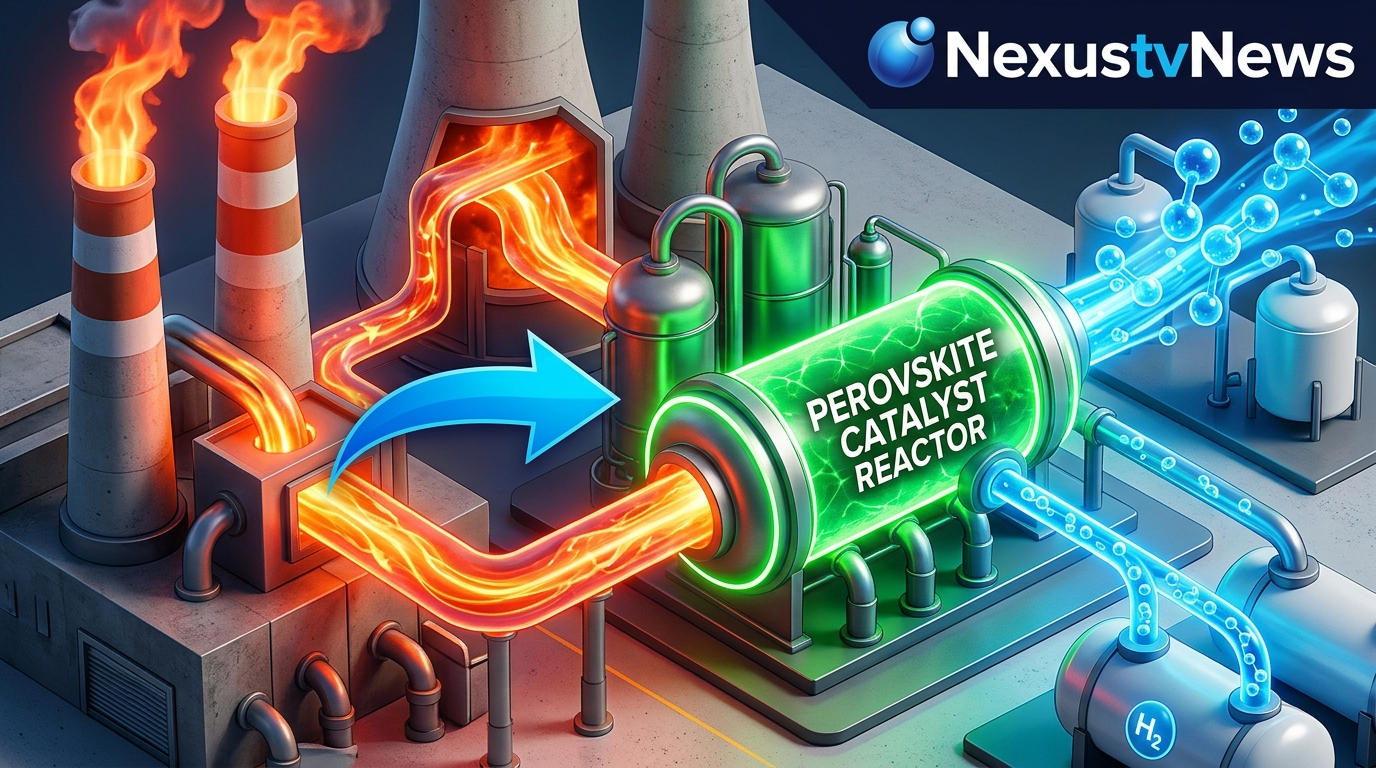
This innovative process opens up an entirely new economic frontier: allowing factories, steel mills, and chemical plants to capture their excess industrial waste heat and convert it directly into high-value, zero-emission fuel.
Overcoming the High-Heat Barrier
While hydrogen is widely celebrated as the ultimate clean fuel—producing only water and heat when consumed—its widespread adoption has historically faced an upstream paradox. Currently, roughly 95% of the world’s hydrogen supply is still derived from fossil fuels due to the intense energy requirements of cleaner alternatives.
Standard thermochemical water-splitting systems require extreme environments to operate effectively. Traditional catalysts require baseline temperatures between 700°C and 1,000°C to split water, and they demand a blistering 1,300°C to 1,500°C just to regenerate the catalyst for the next production cycle.
The University of Birmingham’s new perovskite catalyst completely alters this equation. By significantly lowering the necessary thermal threshold, the system can operate dynamically using mid-tier temperatures. This shift means that localized, decentralized systems can now harvest the thermal energy that heavy industries typically vent into the atmosphere, creating a closed-loop system of clean energy generation.
Market Implications for Global Clean Tech
This development lands at a pivotal time for international business and climate policy, as corporations face increasing regulatory pressure to decarbonize their supply chains. Industrial manufacturing—particularly steel and cement production—accounts for a massive portion of global greenhouse gas emissions.
By integrating this low-temperature hydrogen technology, heavy industries can transition from being major polluters to localized clean-energy hubs. Industry analysts expect this breakthrough to trigger a surge of venture capital and public funding into localized hydrogen infrastructure over the next few years.
By making localized production both technically viable and economically profitable, this scientific milestone bridges the gap between ambitious zero-emission targets and practical market deployment.


