From Food Waste to Climate Weapon: Scientists Engineer Biodegradable Carbon-Catching Beads from Dairy and Tofu Byproducts
From Food Waste to Climate Weapon: Scientists Engineer Biodegradable Carbon-Catching Beads from Dairy and Tofu Byproducts

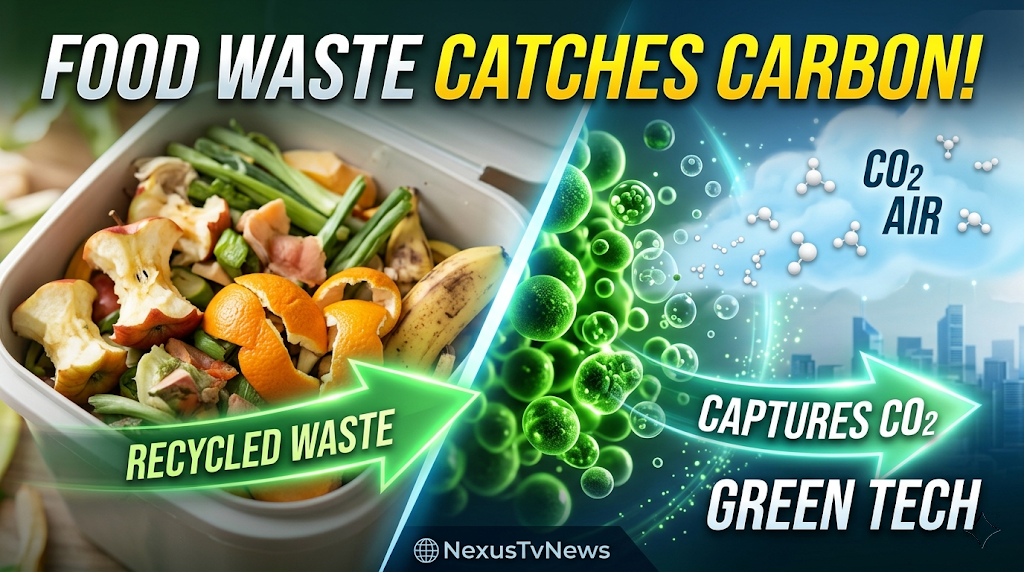
In a groundbreaking convergence of industrial biotechnology and climate science, researchers have successfully developed highly efficient, biodegradable carbon-capturing beads generated entirely from dairy and tofu waste markets. The novel technique offers a dual-benefit blueprint for the circular economy by repurposing common food manufacturing byproducts into a powerful mechanism to combat global greenhouse gas emissions.
A Sustainable Leap in Carbon Capture Technology
Traditional direct air capture (DAC) systems typically rely on synthetic chemical sorbents or complex machinery that require intensive energy inputs and heavy infrastructure investments. While these systems are critical components of global net-zero targets, their high manufacturing costs and environmental footprints have consistently limited rapid commercial scaling.
The newly engineered protein-based beads present a highly competitive alternative. By utilizing structural proteins left behind in dairy whey and tofu processing streams, scientists have formulated an organic matrix capable of binding chemically with carbon dioxide molecules. Initial laboratory testing indicates that these biomaterials can capture ambient CO_2 with an efficiency level that rivals, and in some metrics exceeds, conventional synthetic frameworks.
Fueling the CleanTech Circular Economy
Beyond its atmospheric benefits, the manufacturing process addresses a secondary environmental pain point: industrial food waste management. The dairy and soy processing sectors generate millions of tons of biological waste annually, much of which undergoes costly treatments or ends up in landfills, inadvertently releasing secondary methane emissions.
By diverting these nutrient-rich processing streams into clean-technology manufacturing pipelines, the production of these beads yields a remarkably low carbon footprint from start to finish. Furthermore, because the structural base of the capture material is completely organic, the beads are entirely biodegradable, eliminating the long-term chemical waste liabilities associated with older industrial sorbents.
Commercial Viability and Scaling Up
Industry analysts indicate that the practical, cost-effective nature of this innovation places it directly in line with emerging CleanTech investment trends for late 2026. Global regulatory bodies and enterprise buyers are increasingly favoring sustainability solutions that offer a rapid return on investment and integrate seamlessly into existing corporate workflows.
As the technology transitions from academic labs to pilot industrial facilities, developers are optimizing the lifecycle of the protein beads to ensure they can withstand multiple capture-and-release cycles before naturally degrading. If successfully scaled, this bio-based methodology could soon provide commercial real estate, logistics hubs, and manufacturing plants with cheap, accessible, and localized carbon abatement systems.